
Formula 1: What the preseason tests revealed before the Australian Grand Prix
The nine days of pre-season testing have concluded, and the Australian Grand Prix in Melbourne is just around the corner. After three intense weeks of track work, race simulations, and technical testing, the picture is starting to take shape. Although, as always, the teams don't reveal all their cards during testing, some conclusions can already be drawn about the state of the grid.
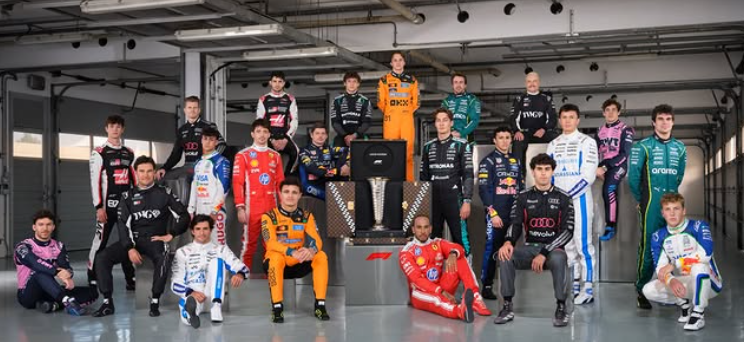
Photo: F1
The Top 4: Same Protagonists
The four teams that have dominated in recent years are once again emerging as the main forces of the season.
Mercedes starts as the favorite. The German team has developed an innovative power unit, making the most of the margins allowed by the regulations in a completely legal manner. On track, they showed one of the best paces, both in short and long runs. While they suffered minor delays and some reliability issues, nothing serious enough to disrupt their preparation. Even with the usual performance suppression inherent in testing, Mercedes is positioned as the initial benchmark.
Ferrari was one of the biggest surprises. The Italian team stood out for its consistency and, above all, for the reliability of its engine. They made hardly any significant modifications and completed 745 laps, accumulating key data without major setbacks. Their innovative rear wing generated buzz in the paddock, but beyond the technical aspects, their performance in race simulations was solid. Furthermore, they showed a clear advantage at the start compared to their direct rivals, a detail that can be decisive on circuits where overtaking is difficult.
The reigning world champions, McLaren, worked discreetly but with enormous effectiveness. The Woking-based team completed the most laps throughout the preseason, with 817, demonstrating consistency and an absence of serious problems. Powered by Mercedes, they showed progressive development during the sessions, and improvements in their starts were noticeable on the final day. According to BBC, they did not use the latest specification of the German power unit, suggesting that they could still have room for improvement. They are not the top favorites, but they will be in the fight.
Red Bull, meanwhile, begins a new era with a completely new engine project in partnership with Ford. For a program in its early stages, the performance was promising, with good power and competitive top speed. However, they were the team with the most interruptions among the leading group, with several sessions affected by car failures. Despite this, they remain one of the four major forces on the grid.
As several drivers pointed out, the true competitive order is still an unknown. The teams haven't shown their full potential, and the real picture will only become clear when the lights go out in Australia.
Haas and Alpine, the surprises of the midfield
At the top of the midfield are two teams that left a very positive impression:
Haas and Alpine. The American team, powered by Ferrari, shared several of the Italian team's strengths: reliability, consistency, and good starts. They completed 794 laps, the second most of any team after McLaren. This consistency could make them a regular contender for points.
Alpine arrives with a completely different narrative compared to last year, when they finished last with just 22 points. The qualitative leap seems significant: solid pace, competitive long runs, and a more stable structure. The team itself has hinted that Mercedes might be holding back performance in its power unit, something that would benefit its customer teams, including Alpine. Beyond speculation, the truth is that the French team looks much more competitive.
In Competitive Limbo
Williams, Audi, and Racing Bulls seem to be stuck in that middle ground between fighting for points and bringing up the rear, depending on the circuit and circumstances.
Williams showed great consistency, completing 790 laps. However, the car's weight problem is worrying. It's estimated they are losing around seven-tenths of a second per lap, a considerable disadvantage that could affect them especially at the start of the season.
Audi officially begins its new project with its own power unit. Although they have been consistent and organized in their program, the performance doesn't yet seem to be at the level of the most competitive teams. It's a project with potential, but still in the consolidation phase.
Racing Bulls finds itself in a similar situation: capable of scoring points under certain conditions, but without any guarantee of consistency throughout the season.
Cadillac and the Big Disappointment
At the bottom of the standings is Cadillac, a newcomer to the category. It's understandable that they're starting from the back, given that it's their first year in Formula 1. Even so, they have experienced drivers and a long-term project in place. They had some difficulties, but their tests weren't disastrous and laid important groundwork for development.
The biggest disappointment of the preseason has been Aston Martin. The arrival of Adrian Newey had generated enormous expectations, but the reality was very different. The team suffered constant failures in the engine, power unit, cooling, gearbox, and chassis. Furthermore, they faced logistical problems and a lack of parts, which severely limited their testing. They barely completed 334 laps, far behind the rest of the grid. Without enough data to analyze and correct, they start the year in a precarious situation.
With everything still to be decided, the season begins with a tight top four, a more competitive midfield than ever, and several unanswered questions. The tests provided clues, but the definitive answers will come when the season officially begins in Melbourne.
